When I was a little girl, my mother noticed I was getting rashes on my arm and behind my knee. She took me to my pediatrician who recommended I go to an allergist. I went, and the results of the allergy testing were pretty sad for me. He said “No peanuts, no chocolate, and no oranges or orange juice.” So every Easter, I’d get the white-colored bunny rabbit and various jelly beans in my basket. Yuck! My siblings had the delicious-looking chocolate ones, plus Reese’s peanut butter eggs, and other chocolate goodies. Imagine the envious look on my little face?
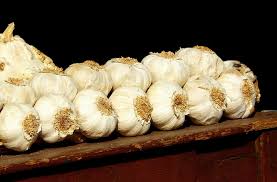
I wasn’t the only one in my family that seemed to have an allergy. It was discovered early on that when we ate something containing garlic, my brother became nauseous and red in the face, and would even throw up. We rarely ate garlic in my home, because my mom mostly cooked early American Anglo-Irish type foods. However, as years passed, it seemed like both my brother and I outgrew our allergies. That was most welcome! The opposite has been the case for my husband, who developed a garlic allergy in his 20s and still has it in his 60s.
My husband told me about his garlic allergy early on in our dating. I was like “That’s no problem! I rarely cook with garlic, anyway.” Over the years, I’ve also been successful at modifying recipes that do, because I do enjoy eating foods from outside my cooking heritage. You do have to be a little creative sometimes, though, but I’ve managed successfully. Luckily my husband can eat onions, chives, leeks, scallions, and shallots, so he doesn’t have a full alliums allergy. If he didn’t eat those, I will say my challenges would be far greater. In most cases, recipes that call for garlic can easily be modified using these alternatives, either alone or in conjunction with various herbs (like oregano, marjoram, chives, or others), spices (like fennel seed, caraway or celery seeds), or by slightly modifying the recipe to include other unique flavors (from wine, to capers, artichoke hearts, etc.) It sure is good that I like to cook, or hubby would be up the creek eating very limited things!
Going to restaurants in the US or buying pre-made foods (frozen or fresh) in the grocery store is very problematic. At restaurants, you always have to ask them to check if there is garlic in the dish. Even dishes you’d never imagine would have it in a million years. Believe me; some chefs in the US use it in almost everything, save maybe desserts. Often they’ll say the chef will make it without or that it doesn’t have it, only to see the dish put in front of my husband with obvious slices of the fresh stuff staring at him. And hubby sometimes doesn’t even notice. It’s usually me that says “Stop! You can’t eat that! They didn’t listen!” Other times when I don’t notice and he eats something with garlic (like the occasional hamburger), he suffers. Yes, some places, usually pubs, even season hamburger meat with garlic! Many times the staff/chef already know that everything on the menu has garlic, so they just say so. If they do try to make the dish without a garlic-containing sauce, for example, the dish is so boring and bland it’s not worth the money. Many certainly don’t try as hard as I do to make the dish nice, with only occasional exceptions (usually high-end restaurants). Or sometimes the dishes are prepared ahead of time for just reheating. Once a diner waitress said “Sorry, but we’ll give you a corn on the cob for free.” Another time at a restaurant, my husband just ate carrot cake for dinner.
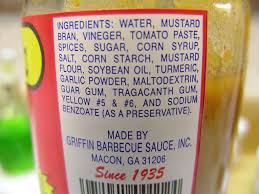 Frozen or prepared “to go” foods from the grocery store are laden with garlic; again, things you’d assume wouldn’t have it. We have to look at the ingredient lists on every product very carefully. Such foods are usually pretty low quality, as it is. Garlic is often added simply because it’s a cheaper flavoring than adding more expensive ingredients, like herbs and spices. Sometimes pre-roasted chickens have garlic on them deliberately, because it’s a known fact that garlic can mask the flavor of not so fresh or high-quality meats, and other foods.
The fact is that many people, and even chefs/cooks, nowadays are perhaps a bit obsessed with garlic. When garlic is included in almost every non-dessert dish, doesn’t it go a bit too far sometimes? American Italian restaurants are notorious for including garlic (sometimes large amounts) in almost everything. I think they believe that most Americans now even expect it. I say “American Italian”, because my husband and I have traveled to Italy (mostly the north to central parts) many times and he had no trouble finding several dishes on each menu that he could eat; ones without any garlic to begin with. It’s the same in certain other countries in Europe.
I found an interesting article, The Pungent Debate of Using Garlic In Cooking, that describes how an actual Italian chef came to Canada and initially forbade the use of garlic by his cooks. His reasoning was based on Italian cookbook author Marcella Hazan’s book Essentials of Classical Italian Cooking, published in 1992. Hazan wrote, “There are some Italians who shun garlic, and many dishes at home and in restaurants are prepared without it…The unbalanced use of garlic, is the single greatest cause of failure in would-be Italian cooking.” In the article Italy’s Great Garlic Divide, chef Daniele Uditi, chef at Los Angeles pizza mecca Pizzana, says that only now are some chefs just beginning to realize [despite the craze] that garlic can be “either your greatest aid or your worst enemy.”
I, personally, find that the very freshest ingredients and flavorings help dishes shine. One must be careful not to overwhelm these flavors with stronger ones, like garlic, simply as a matter of habit. Though my husband must not eat garlic, I certainly occasionally enjoy it where it is truly meant to be. I still see garlic ending up in more and more places that I can’t imagine it belongs. Products that used to be my favorite (that didn’t have garlic), suddenly have it added.
It should be known, though, that most of the Italian immigrants that came to the US in the past were mostly from southern Italy, where garlic is more often used. Also, another theory holds that “… Italian immigrants to North America were so poor that garlic was all they had to scent their meagre bowls of polenta or cover over the poor flavour of low-quality meat.” Again, perhaps the frequent use became a habit, even after financial conditions improved. It is also known that the quality of produce and meats in grocery stores deteriorated over time. Fewer people grow their own or obtain it locally.
I forget exactly when it was…perhaps 20-30 years ago…when garlic began being advertised as a super health-promoting god of ingredients. It was said that it’s full of vitamins and minerals, helps combat various illnesses (like the common cold), can reduce blood pressure, cholesterol levels, contains antioxidants that can help prevent Alzheimer’s disease and dementia, increase athletic performance, detoxify heavy metals in the body, improve bone health, and generally help you live longer (facts from 11 Proven Health Benefits Of Garlic.) Wow! Maybe now I really do know why some people want to add it to almost everything! I even know they sell garlic in pill form. Whether all of these claims are really true, or overblown hype, I don’t know, but I’m sure this has also contributed to its extreme use in the US. Hubby, however, will have to take his chances without it. Me, too, for the most part.
Do you like garlic? How frequently do you use garlic in your cooking, and why?